
Summary
Comparing a Salmonella antigen test vs blood culture involves considering testing speed, specimen collection and access to laboratory services. JAL Medical’s iCARE Salmonella Typhi/Paratyphi Antigen Rapid Test offers a practical option for facilities seeking a rapid, stool-based antigen result with minimal equipment. Its combined antigen coverage and defined reading window are useful operational features for professional testing settings.
Salmonella Typhi & Paratyphi Antigen Test Kit: Practical Advantages
The Salmonella Typhi & Paratyphi antigen test kit from JAL Medical brings several testing requirements into one cassette-based format. For facilities reviewing enteric fever diagnostics, its main advantages concern the time and infrastructure needed to obtain a preliminary result.
| Practical consideration | JAL Medical iCARE antigen kit | Blood culture |
|---|---|---|
| Reading time | Defined 15–20-minute reading window after sample application | Requires laboratory processing and bacterial growth |
| Specimen collection | Uses stool without a blood draw for this assay | Requires a blood specimen |
| Equipment | Kit components and a timer for the assay | Requires microbiology facilities |
| Detection coverage | Combined Typhi and Paratyphi antigen coverage | Depends on the organism recovered |
| Output | Qualitative, preliminary antigen finding | Organism recovery when successful |
Salmonella Antigen Test vs Blood Culture: Faster Preliminary Results
The iCARE kit’s defined reading window is a practical advantage when clinicians need timely supporting information. JAL Medical specifies reading at 15–20 minutes after the extracted specimen is added. This describes the assay reading time; collection, preparation and reporting add to the overall workflow.
Typhoid culture testing requires laboratory processing before an organism can be recovered and identified. The rapid cassette therefore offers an earlier preliminary antigen finding, although speed alone does not establish diagnostic superiority.
Planning Salmonella Typhi test kit sourcing?
Share the product, quantity and destination country you need so we can respond to your enquiry.
Salmonella Typhi Fecal Antigen Test: No Blood Draw for the Assay

JAL Medical’s product uses a human fecal specimen. This removes the need for a blood draw specifically to perform the antigen assay and gives facilities a different specimen-collection option.
Stool collection still requires clear instructions, suitable handling and appropriate precautions. A clinician may also request blood specimens or other investigations, depending on the assessment. The benefit is the kit’s stool-based format rather than the removal of all other testing requirements.
Combined Salmonella Typhi and Paratyphi Antigen Coverage
A single iCARE cassette provides combined coverage for S. Typhi and Paratyphi antigens. This allows facilities to use one assay format for the product’s stated targets.
Combined coverage does not mean separate identification. A positive test line does not identify which target produced the result or establish that both are present. Buyers should review the current JAL Medical IFU for the exact detection claims and reporting limitations.
Related product
Salmonella Typhi & Paratyphi Antigen Rapid Test Kit
Rapid cassette antigen test for combined S. Typhi and Paratyphi detection, using a stool specimen with a 15–20 minute reading window.
iCARE Antigen Rapid Test: Minimal Equipment Requirements
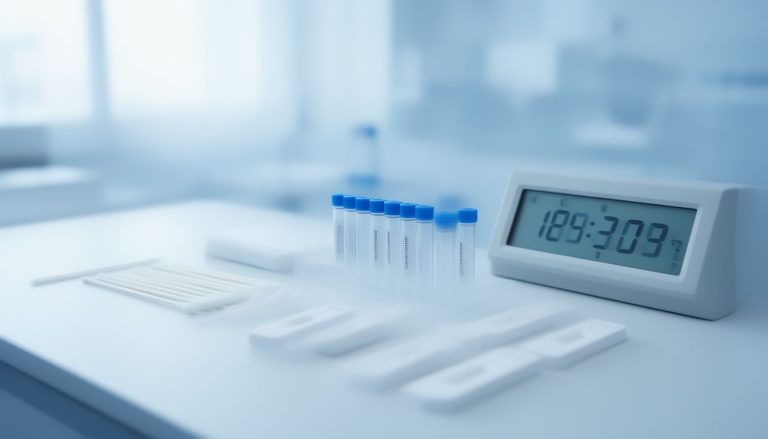
The cassette format reduces the equipment needed to run the assay. JAL Medical supplies the test devices, extraction-buffer collection tubes and package insert, with a timer required separately.
This is a practical consideration for facilities without on-site culture capability. Staff training, specimen precautions, correct timing and result documentation remain necessary even when the assay requires little equipment.
Salmonella Typhi & Paratyphi Test Kit Storage and Procurement
JAL Medical lists a kit storage range of 2–30°C and several pack configurations. These options allow purchasing teams to consider available storage conditions and expected testing demand when selecting quantities.
Storage and transport must remain within the labelled conditions. Buyers should confirm the current expiry dates, pack availability, product documentation and local registration requirements before ordering. Extracted specimens have separate handling requirements and should not be managed using unopened-kit storage instructions.
Typhoid Culture Testing: Understanding the Different Output
The iCARE kit produces an antigen finding, while blood culture attempts to recover the organism. The practical advantages of rapid testing therefore relate to workflow, access and reading time.
JAL Medical’s antigen result is preliminary and should not be the sole basis for diagnosis. A negative result does not exclude infection. The choice and timing of additional investigations remain clinical decisions rather than a fixed sequence beginning with the rapid kit.
Request JAL Medical Product Documentation
Healthcare purchasing teams can contact JAL Medical for the current IFU, available pack configurations, bulk supply details and supporting product documents. Reviewing these materials helps facilities assess whether the kit suits their staffing, storage and reporting arrangements.
Conclusion
JAL Medical’s iCARE kit offers practical advantages through rapid reading, stool-based sampling, combined antigen coverage and minimal assay equipment. These features can make testing easier to organise where microbiology services are difficult to access. Facilities should assess those operational benefits alongside the kit’s preliminary reporting role and their arrangements for further investigation.
Frequently Asked Questions
What is the main practical advantage of JAL Medical’s iCARE kit?
JAL Medical’s iCARE kit offers a defined 15–20-minute reading window after specimen application, helping facilities obtain a preliminary antigen finding without waiting for bacterial culture processing.
Does the JAL Medical antigen kit require blood collection?
No. JAL Medical’s assay uses a stool specimen. Clinicians may still request blood collection for other investigations when appropriate.
Does one cassette separately identify Typhi and Paratyphi?
No. JAL Medical’s cassette provides a combined antigen finding. It does not separately identify which target is present.
Why consider the kit where laboratory access is limited?
JAL Medical’s cassette-based assay requires minimal equipment, making its operational requirements easier to accommodate than an on-site culture workflow. Professional handling and correct procedures remain necessary.
Does the rapid antigen kit replace blood culture?
No. JAL Medical’s kit provides a preliminary antigen result, while blood culture attempts organism recovery. Clinicians determine which investigations are appropriate.
Request product documents and pack details
Ask for the current IFU, available pack configurations and supporting documents to review before ordering.