

Table of Contents
Objective:
This article aims to help women with PCOS (Polycystic Ovary Syndrome) or thyroid disorders understand how irregular periods affect pregnancy testing, how pregnancy test kits work in these conditions, how to choose the right test and when to seek medical support for accurate diagnosis and safer fertility planning.
Pregnancy Test Kit Challenges: Why Irregular Periods Make Pregnancy Detection Difficult in PCOS and Thyroid Disorders
Irregular periods are one of the most common symptoms in women with PCOS or thyroid disorders and they can significantly complicate pregnancy detection. Menstrual cycles usually follow a predictable pattern, but hormonal imbalances disrupt ovulation timing, making it nearly impossible to know the exact day ovulation occurred. Since most pregnancy testing relies on the number of days after ovulation, this unpredictability creates confusion and stress.
In PCOS, elevated androgens and insulin resistance can delay or completely prevent ovulation for weeks or months. Similarly, thyroid disorders – whether hypothyroidism or hyperthyroidism – impact the hormones responsible for regulating the menstrual cycle. Because ovulation may be delayed or skipped entirely, many women with these conditions cannot depend on traditional cycle-based timing for testing.
This unpredictability leads to mistimed pregnancy tests, often resulting in false negatives. A woman may test too early, long before the hormone hCG begins to rise, simply because she didn’t know she ovulated late. Understanding these irregularities is the first step toward smarter pregnancy testing for women managing PCOS or thyroid conditions.

Pregnancy Test Function: How Pregnancy Test Kits Work for Women With PCOS or Thyroid Issues
A Pregnancy Test Kit works by detecting human chorionic gonadotropin (hCG), a hormone produced after a fertilized egg implants in the uterus. While this sounds straightforward, hormonal disorders can complicate the process. Women with PCOS often experience delayed ovulation, meaning hCG begins rising later than expected. Thyroid imbalances can also affect the timing of implantation and early hormonal signals.
An HCG Pregnancy Test measures hormone levels in urine. The more sensitive the kit, the earlier it can detect the hormone. For women with irregular cycles, choosing an HCG Pregnancy Test Kit with high sensitivity is especially important because it can detect lower levels of hCG, reducing the chances of false negatives.
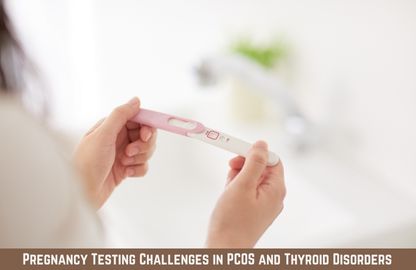
Digital tests also help remove guesswork. A Pregnancy Midstream Test or Midstream Test Pregnancy device can be more user-friendly for women who have difficulty collecting urine samples accurately. Advanced options like an Advanced Pregnancy Test Kit with higher sensitivity are ideal for women with PCOS or thyroid issues because they provide faster and more reliable detection.
HCG Pregnancy Test Timing: Best Time to Use a Pregnancy Test Kit When Cycles Are Irregular
Women with regular cycles can easily test 10–14 days after ovulation, but for those with PCOS or thyroid disorders, ovulation may happen at any point in a given month. This makes timing much trickier. Instead of relying solely on the calendar, women with unpredictable cycles should focus on physical cues and cycle-tracking tools.
Tracking signs like cervical mucus changes, ovulation pain or mild temperature shifts can help narrow down ovulation timing. However, symptoms alone may not be reliable for women with hormonal imbalances. In such cases, waiting at least 21 days after the last sexual intercourse is generally recommended before using a Pregnancy Test Card.
If your period is late by over two weeks from your longest usual cycle, it’s an appropriate time to test. Women with PCOS may go several months without a period, so watching for early pregnancy symptoms – fatigue, nausea, breast tenderness or frequent urination – can help determine the best time to use a Rapid Pregnancy Detection Kit.
Pregnancy Test Kit HCG Accuracy: False Negatives in PCOS and Thyroid Disorders – Why They Happen and How to Avoid Them
False negatives are common among women with irregular cycles. One major cause is late ovulation. If ovulation happens much later than expected, hCG will not yet be detectable, even if conception has occurred. This often leads women to believe they are not pregnant when they test too early.
Another issue is low hCG levels. Some women naturally produce hCG more slowly, especially those with hormonal imbalances. Using diluted urine – particularly after drinking a lot of water – can also contribute to false negatives. For more accurate testing, urine should be collected during the first morning void, when hormones are most concentrated.
To avoid inaccurate results, women with PCOS or thyroid conditions should use highly sensitive tests like a Pregnancy Test Kit with early detection claims. Repeat testing every 48–72 hours is advised if results are unclear or symptoms continue. If faint lines appear, using a digital Pregnancy Test Card can give a clear yes/no result.
HCG Pregnancy Kit Selection: Choosing the Right Pregnancy Test Kit for Irregular Periods
Choosing the right Pregnancy Test Kit makes a huge difference for women with irregular periods. Standard strip tests are affordable and widely available, but they may not be sensitive enough for early detection. A Pregnancy Midstream Test or Midstream Test Pregnancy option is easier to use and often more accurate because it avoids issues with urine collection.
For women with PCOS or thyroid disorders, a digital HCG Pregnancy Test Kit can remove the confusion of interpreting faint lines. Digital tests often provide more precise readings and higher sensitivity. An HCG Pregnancy Test Kit with 10 mIU/mL sensitivity is ideal for early or uncertain cycles.
Women who prefer private testing at home can benefit from kits offered by Pregnancy Test Kits Manufacturers that specialize in high-quality, medical-grade products. A Rapid Pregnancy Detection Kit is useful for those wanting quick confirmation. Always check the expiry date and ensure the packaging is sealed for accurate results.
Pregnancy Test Card Uncertainty: When to Consult a Gynecologist If Results Stay Unclear
If pregnancy results remain unclear even after multiple tests, it’s time to consult a gynecologist. Women with PCOS may have irregular bleeding, spotting or long cycle gaps that mimic pregnancy symptoms. Thyroid disorders can cause similar issues, making self-diagnosis difficult.
Seek medical advice if:
- You have no period for 35–45 days or more
- You see repeated faint lines or mixed results
- You feel early pregnancy symptoms but tests come back negative
- You experience unusual pelvic pain or heavy bleeding
- You have been actively trying to conceive for 6–12 months without success
Doctors can perform blood hCG tests and ultrasounds, which are far more accurate than home kits. They can also adjust thyroid medication or provide PCOS-specific fertility support if needed.
Advanced Pregnancy Test Kit Insights: Supporting Fertility Health for Women With PCOS & Thyroid Disorders
Pregnancy Test Kit use is only one part of a bigger picture. Women with hormonal disorders can improve their fertility and reproductive health by managing lifestyle factors and medical treatments.
Helpful strategies include:
- Maintaining a healthy weight to regulate hormone levels
- Following thyroid medication schedules consistently
- Reducing stress through yoga, meditation or counseling
- Eating a balanced diet rich in whole foods to stabilize insulin levels
- Tracking cycles with apps or ovulation tests to improve timing
- Avoiding smoking and excessive alcohol
- Going for regular reproductive health check-ups
For women with PCOS or thyroid disorders, proactive health management improves not just fertility but overall well-being. When paired with reliable pregnancy testing tools like an Pregnancy Midstream Test, you can identify pregnancy early and receive proper prenatal care.

Conclusion
Pregnancy testing becomes more complicated when dealing with PCOS or thyroid disorders, but with the right information and the right tools, it becomes manageable and far less stressful. Pregnancy test kits – whether midstream, digital or high-sensitivity – give women with irregular periods the ability to detect pregnancy early, avoid false negatives and make informed decisions about their health. With proper timing, repeated testing when needed and support from healthcare professionals, women with hormonal imbalances can navigate pregnancy detection with confidence and clarity.
FAQs About Pregnancy Test Kits
Can women with irregular periods trust home pregnancy tests?
Yes, but they should choose high-sensitivity kits and test later than usual or repeat the test for accuracy.
Why do women with PCOS get more false negatives?
Because they often ovulate late, meaning hCG rises later than expected, leading to early testing errors.
When should I take a pregnancy test if my cycle is unpredictable?
Testing 21 days after unprotected intercourse or when symptoms appear is a reliable approach.
Do thyroid issues affect pregnancy test results?
Not directly, but they may delay ovulation, causing mistimed testing and inaccurate early results.
When should I see a doctor about unclear test results?
If results stay faint, mixed or your period is missing for over 35–45 days, consult a gynecologist.