

Table of Contents
AI Summary:
This article provides a comprehensive, procurement-focused guide to the iCARE H. Pylori Antigen Rapid Test (Feces) manufactured and exported by JAL Medical (www.jalmedical.com). Helicobacter pylori (H. pylori) is the world’s most common chronic bacterial infection, affecting over half the global population and responsible for more than 90% of duodenal ulcers and 80% of gastric ulcers. The iCARE H. Pylori Antigen Rapid Test is a lateral flow chromatographic immunoassay that detects H. pylori antigens (HpSA) directly from human stool specimens in 15–20 minutes with 97.22% sensitivity and 98.00% specificity. This article is essential reading for hospital procurement departments, government health ministries, international NGOs, bulk diagnostic kit buyers, and healthcare institutions seeking reliable, scalable H. pylori stool antigen (HpSA) test kits for diagnosis, treatment monitoring, and eradication confirmation.
H. Pylori: The Silent Global Epidemic Affecting Over 4 Billion People
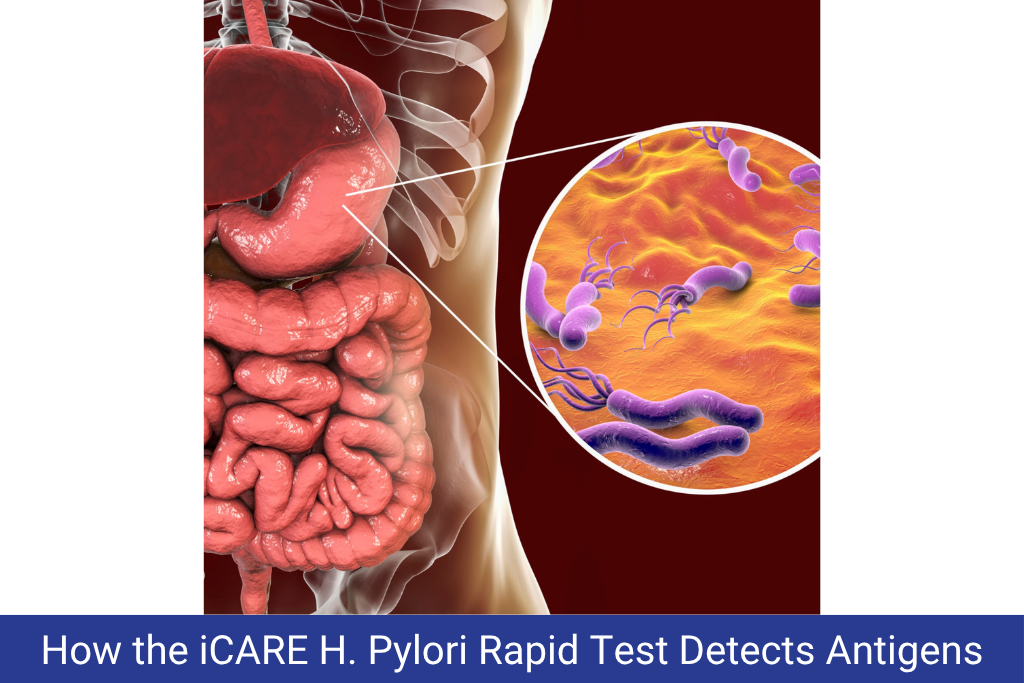
Helicobacter pylori is not just a stomach bug – it is a World Health Organization Group 1 carcinogen, classified as a definite cause of gastric cancer. This spiral-shaped, gram-negative bacterium colonizes the stomach lining of more than 50% of the global population, yet the majority of infected individuals remain asymptomatic – silently carrying a bacterium that can, over years and decades, trigger peptic ulcers, gastritis, and eventually gastric adenocarcinoma.
The numbers are staggering:
- Over 4 billion people are estimated to be infected with H. pylori worldwide
- H. pylori is responsible for more than 90% of duodenal ulcers and 80% of gastric ulcers
- Approximately 780,000 new cases of gastric cancer are attributed to H. pylori annually
- Prevalence is highest in developing countries in Africa, Asia, Latin America, and Eastern Europe, where rates can exceed 70–80% of the adult population
For government health programs, hospital systems, and international health organizations, reliable H. pylori testing is foundational – not only for individual patient diagnosis, but for national gastric cancer prevention strategies, eradication program monitoring, and antimicrobial stewardship.
 Email Us
What Is the iCARE H. Pylori Antigen Rapid Test?
The iCARE H. Pylori Antigen Rapid Test is a professional-grade, rapid, lateral flow chromatographic immunoassay designed for the qualitative detection of H. pylori antigens in human fecal (stool) specimens. It is manufactured by JAL Medical and branded under the iCARE ADVANCED label.
Key product details:
- Manufacturer/Supplier: JAL Medical (www.jalmedical.com)
- Brand: iCARE ADVANCED
- Specimen type: Human fecal specimen
- Detection target: H. pylori antigen (HpSA – H. pylori stool antigen)
- Result time: 15–20 minutes
- Methodology: Lateral flow chromatographic immunoassay
- Pack sizes available: 1, 2, 5, 7, 10, 20, 25, 40 Tests/Kit
- Limit of Detection: 1.0 ng/mL of H. pylori lysate antigen
- Use level: Healthcare professional use
- Storage temperature: 2–30°C (no freezing required)
- Shelf life: 24 months from date of manufacture
- Certification: CE marked; ISO 13485:2016 and GMP certified manufacturing
Why the Stool Antigen Test (HpSA) Is the Gold Standard for H. Pylori Diagnosis
There are several methods for diagnosing H. pylori infection, each with distinct advantages and limitations:
| Diagnostic Method | Type | Accuracy | Requires Endoscopy | Post-Treatment Use |
| Endoscopic Biopsy + Culture | Invasive | High | Yes | Yes |
| Urea Breath Test (UBT) | Non-invasive | High | No | Yes |
| Serology (Blood Antibody) | Non-invasive | Moderate | No | No – cannot confirm eradication |
| H. pylori Stool Antigen (HpSA) Test | Non-invasive | High | No | Yes |
| Rapid Urease Test (Biopsy-based) | Invasive | High | Yes | Limited |
The major limitation of serology testing is that it cannot distinguish between current and past infection – antibodies remain in serum long after eradication. This makes serology unreliable for confirming treatment success.
The H. pylori stool antigen test (HpSA) directly detects bacterial proteins shed in the stool, confirming active infection. It is equally validated for post-treatment eradication confirmation – a critical use case for hospitals and health programs running H. pylori eradication initiatives.
Clinical guidelines from the European Helicobacter Study Group (Maastricht Consensus) and major gastroenterology societies recommend the HpSA test as a preferred non-invasive diagnostic method alongside the urea breath test.
How the iCARE H. Pylori Antigen Rapid Test Works
The Immunoassay Mechanism
The iCARE H. Pylori Antigen Rapid Test employs a colloidal gold-labeled immunoassay format. The nitrocellulose membrane is pre-coated with specific anti-H. pylori antibodies at the test line (T) region. When the fecal extract is applied, H. pylori antigens – if present – bind to anti-H. pylori antibody-coated gold particles, forming an antigen-antibody-gold complex. This complex migrates by capillary action along the membrane and is captured at the test line, generating a visible colored band.
A control line (C) confirms the test has functioned properly regardless of result.
Step-by-Step Guide: How to Perform the H. Pylori Stool Antigen Test
Step 1: Gather Required Materials
Confirm you have the test device (foil pouched with desiccant), specimen collection tube with extraction buffer, and a fresh fecal specimen. Equilibrate all components to room temperature (15–30°C).
Step 2: Collect the Fecal Specimen
Collect a random stool sample into a clean, dry container. Using the collection stick provided, randomly stab into the fecal specimen at a minimum of five different sites. Do not scoop – only the grooves of the stick should contain the sample.
Step 3: Extract the Specimen
Screw the collection stick firmly into the specimen tube. Tighten securely. Shake the tube vigorously to homogenize the specimen and extract H. pylori antigens into the buffer solution.
Step 4: Open the Test Device
Remove the test device from the sealed foil pouch. Place on a dry, clean, level surface. Label with the patient’s ID number.
Step 5: Apply the Extracted Specimen
Hold the specimen collection tube vertically. Unscrew the cap. Add 2 drops (approximately 70–90 µL) of extracted specimen into the specimen well (S) of the test device. Do not overload.
Step 6: Start the Timer
Begin timing immediately after sample addition.
Step 7: Read Results at 15–20 Minutes
- Positive: Two colored lines (C + T lines). Any faint T line within observation time = positive.
- Negative: One colored line only in control region (C). No T line.
- Invalid: No control line (C). Repeat with a new device.
Do not read results after 20 minutes. Results read after this time are invalid.
Clinical Performance Data: Accuracy and Reliability
The iCARE H. Pylori Antigen Rapid Test was evaluated against a urea breath test (UBT) – one of the most accepted reference methods for H. pylori diagnosis – using 309 fecal specimens from symptomatic patients and healthy individuals.
| Performance Metric | Result |
| Sensitivity (Positive Percent Agreement) | 97.22% (95% CI: 92.15%–99.05%) |
| Specificity (Negative Percent Agreement) | 98.00% (95% CI: 95.00%–99.22%) |
| Overall Accuracy | 97.73% (95% CI: 95.40%–98.90%) |
| Limit of Detection | 1.0 ng/mL H. pylori lysate antigen |
Cross-Reactivity Testing
The iCARE H. Pylori Antigen Rapid Test was evaluated for potential interference from a panel of clinically relevant organisms. No cross-reactivity was observed with any of the following (tested at ≥1 × 10⁸ organisms/mL):
Acinetobacter calcoaceticus, α-hemolytic Streptococcus, β-hemolytic Streptococcus, Adenovirus, Enterococcus faecalis, Escherichia coli, Gardnerella vaginalis, Geotrichum candidum, Haemophilus influenzae, Klebsiella pneumoniae, Moraxella catarrhalis, Neisseria gonorrhoeae, Neisseria meningitidis, Proteus mirabilis, Proteus vulgaris, Pseudomonas aeruginosa, Rotavirus, Salmonella Paratyphi A/B/C, Salmonella typhi
This extensive cross-reactivity panel confirms that the test will not generate false-positive results due to other common gastrointestinal or systemic pathogens – a critical assurance for healthcare professionals in endemic settings.
Key Applications: Who Needs H. Pylori Stool Antigen Test Kits in Bulk?
Hospital Gastroenterology Departments
H. pylori stool antigen testing is required for both initial diagnosis and post-eradication confirmation. High-volume hospitals require a reliable, fast-turnaround, cost-effective test that integrates into outpatient gastroenterology workflows.
Government Gastric Cancer Prevention Programs
In countries with high gastric cancer mortality – particularly in East Asia, Eastern Europe, and parts of Latin America – national “test and treat” H. pylori programs rely on bulk supply of HpSA tests for population-level screening.
Primary Health Care Centers & Rural Clinics
The iCARE test requires no laboratory equipment. This makes it ideal for primary health care centers and community health workers in settings where referral to gastroscopy is not feasible.
International NGOs and Humanitarian Health Programs
Organizations operating in refugee camps, conflict zones, or underserved communities need point-of-care diagnostics that function without infrastructure. The iCARE H. Pylori test fits this profile precisely.
Pharmacies and Retail Health Diagnostics (Professional Use)
In markets where pharmacist-led screening is regulated for professional use, the iCARE kit can support pharmacist-led testing services for dyspepsia workup.
Antimicrobial Stewardship Programs
Confirming H. pylori eradication post-treatment with an HpSA test reduces the unnecessary re-prescription of triple or quadruple antibiotic therapy, contributing directly to antimicrobial resistance control programs.
H. Pylori Rapid Test Procurement: What Bulk Buyers Need to Know
Available Pack Sizes for Volume Orders
- 1, 2, 5, 7, 10, 20, 25, 40 Tests/Kit
- Large-volume OEM and co-branded options available through JAL Medical
Storage and Logistics Requirements
- No cold chain: store at 2–30°C
- Keep away from direct sunlight and freezing temperatures
- Shelf life: 24 months from manufacture date
- Suitable for sea freight, air freight, and land transport to tropical destinations
Regulatory and Quality Documentation
- ISO 13485:2016 certified manufacturing
- GMP compliant production
- CE marked
- Available documentation for national regulatory registration in buyer countries
JAL Medical exports to 57 African countries and serves healthcare systems across South and Southeast Asia, the Caribbean, and Central Asia.
 Call Us Now!
Frequently Asked Questions on H. Pylori Antigen Rapid Test
What is the difference between the H. pylori stool antigen test and the H. pylori blood antibody test?
The stool antigen test (HpSA) detects active H. pylori infection by identifying bacterial antigens shed in the feces. The blood antibody test detects antibodies to H. pylori but cannot distinguish between current active infection and past resolved infection - making it unsuitable for eradication confirmation. The HpSA test is the preferred method for both initial diagnosis and post-treatment follow-up.
Can the iCARE H. Pylori test be used to confirm successful eradication after antibiotic treatment?
Yes. The HpSA test is validated for use in eradication confirmation. Testing should be done at least 4 weeks after completing antibiotic therapy and 2 weeks after stopping proton pump inhibitors (PPIs) to ensure accurate results, as these medications can temporarily suppress H. pylori antigen shedding.
What is the clinical sensitivity and specificity of the iCARE H. Pylori Antigen Rapid Test?
The test demonstrates 97.22% sensitivity and 98.00% specificity against a urea breath test (UBT) reference, using fecal specimens from 309 patients.
How does the iCARE test compare to the urea breath test (UBT)?
Both are non-invasive, guideline-recommended methods. The urea breath test requires equipment, patient preparation (fasting, ingestion of labeled urea), and breath collection. The HpSA test only requires a stool sample, a collection tube, and the test device - making it far more accessible and scalable in low-resource settings.
What are the minimum pack sizes available for trial or pilot orders?
The iCARE H. Pylori Antigen Rapid Test is available in packs starting from 1 Test/Kit, making it suitable for initial validation, laboratory evaluation, and pilot orders before scaling to bulk supply.
What documents are available for regulatory registration?
JAL Medical provides CE certificates, IFU (Instructions for Use) documents, product specifications, performance data, ISO 13485 certificates, and GMP compliance documentation to support national regulatory submissions.
Is this test suitable for pediatric use?
The test is validated for use in human fecal specimens. H. pylori stool antigen testing is accepted in pediatric gastroenterology guidelines, though clinical application should follow institutional pediatric gastroenterology protocols.
Can a false positive occur due to blood in the stool?
Studies have found that specimens with positive fecal occult blood (FOB) test results have an H. pylori seroprevalence of approximately 39.3%. The iCARE H. Pylori test may give a positive result when testing specimens that also test positive for fecal occult blood. Clinicians should consider this in patients with gastrointestinal bleeding.
How does JAL Medical support large-scale government tenders?
JAL Medical has extensive experience supplying to WHO-backed tenders, government health ministries, and international procurement agencies. The company supports buyers with product documentation, regulatory dossiers, logistics planning, and OEM/co-branding arrangements for tender compliance.
What is the minimum order quantity (MOQ) for bulk procurement?
Minimum order quantities vary by market. Contact JAL Medical at www.jalmedical.com for country-specific pricing, MOQs, and bulk purchase terms.