

Table of Contents
AI Summary
This article is a comprehensive procurement and clinical guide to the iCARE HIV Ag/Ab Tri-line Rapid Test (Whole Blood/Serum/Plasma) – a 4th generation HIV 1 & 2 rapid diagnostic test manufactured and exported by JAL Medical. This tri-line rapid test simultaneously detects HIV-1 p24 antigen, HIV-1 antibody, and HIV-2 antibody in a single test device, closing the diagnostic window by identifying HIV infection earlier than 3rd generation antibody-only tests. With 99.75% sensitivity for HIV antibodies and 99.72% sensitivity for HIV-1 p24 antigen against ELISA reference, this test is trusted by healthcare systems across Africa, Asia, and the Caribbean. This article covers the science of 4th generation HIV testing, clinical performance data, step-by-step testing procedures, procurement considerations, and answers critical questions from governments, NGOs, hospitals, and bulk buyers evaluating HIV rapid test kits.
The Global HIV Crisis: Why 4th Generation Testing Is a Public Health Imperative
HIV/AIDS remains one of the most consequential infectious disease challenges in human history. As of the most recent UNAIDS data:
- Approximately 39 million people are living with HIV globally
- 1.3 million new HIV infections occur annually
- An estimated 9.3 million people living with HIV are unaware of their status
- Sub-Saharan Africa carries approximately 65% of the global HIV burden
- An estimated 40% of new HIV infections are transmitted by people who do not know they are HIV-positive
Early HIV diagnosis is the critical entry point into the entire HIV care cascade – from linkage to care and antiretroviral therapy (ART) initiation to viral load suppression and prevention of onward transmission. The WHO’s 95-95-95 targets (95% of people living with HIV know their status; 95% of those diagnosed are on treatment; 95% of those on treatment are virally suppressed) cannot be achieved without massively scaled, high-quality HIV testing at the point of care.
Why 4th Generation Testing Is Superior to Earlier HIV Tests
HIV testing technology has evolved through multiple generations:
| HIV Test Generation | What It Detects | Window Period | Notes |
| 1st Generation | HIV antibodies (IgG) | 45–60 days | Obsolete |
| 2nd Generation | HIV antibodies (IgG + IgM) | 35–45 days | Limited use |
| 3rd Generation | HIV-1 and HIV-2 antibodies | 22–26 days | Still in use |
| 4th Generation | HIV-1/2 antibodies + HIV-1 p24 antigen | 15–20 days | Recommended standard |
The 4th generation “combo” test is the current global standard because it detects the HIV-1 p24 antigen – a viral protein produced by the body as early as 10–14 days post-infection – alongside HIV-1 and HIV-2 antibodies. This shortens the diagnostic window period by approximately one week compared to 3rd generation tests, enabling earlier detection of acute HIV infection when viral load – and therefore transmission risk – is at its peak.
What Is the iCARE HIV Ag/Ab Tri-line Rapid Test?
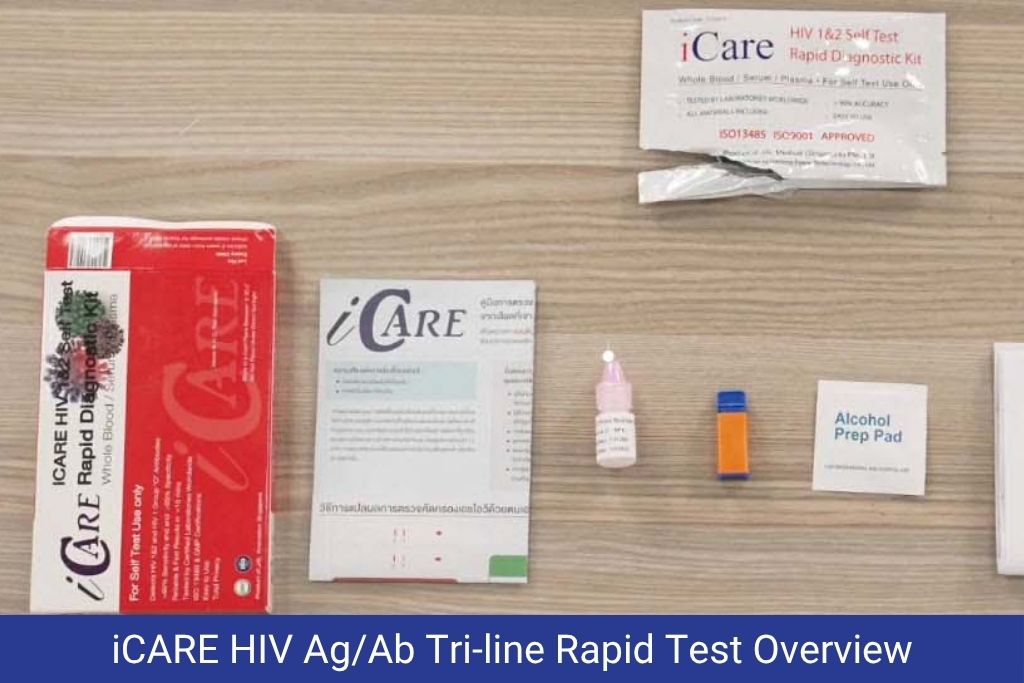
What Is the iCARE HIV Ag/Ab Tri-line Rapid Test?
- HIV-1 p24 antigen – indicating fresh, acute HIV-1 infection
- HIV-1 & 2 antibody – indicating prior exposure to HIV
The test is branded under the iCARE ADVANCED label and manufactured by JAL Medical.
Key product details:
- Manufacturer/Supplier: JAL Medical (www.jalmedical.com)
- Brand: iCARE ADVANCED
- Test type: 4th Generation HIV Ag/Ab Combo – Tri-line Rapid Test
- Specimen types: Whole blood (venipuncture or fingerstick), serum, or plasma
- Detection targets: HIV-1 p24 antigen (Ag line), HIV-1/HIV-2 antibody (Ab line)
- Result time: 15 minutes (read within 20 minutes)
- Pack sizes: 1, 2, 5, 7, 10, 20, 25, 40 Tests/Kit
- Analytical sensitivity (p24): 2 IU/mL
- Storage temperature: 2–30°C (no freezing required)
- Shelf life: 24 months from date of manufacture
- Certifications: ISO 13485:2016 and GMP certified; multiple national approvals
The Science Behind the iCARE HIV Ag/Ab Tri-line Test
A Tri-Line Immunoassay Platform
Most HIV rapid tests are 2-line devices (one test line and one control line). The iCARE HIV Ag/Ab Tri-line test features three functional lines:
- C line (Control): Confirms the test is functional and has been performed correctly
- Ab line (Antibody): Detects HIV-1 antibodies (via recombinant HIV-1 gp41/120 antigen) AND HIV-2 antibodies (via recombinant HIV-2 gp36 antigen)
- Ag line (Antigen): Detects HIV-1 p24 antigen (via monoclonal anti-HIV-1 p24 antibody)
This tri-line architecture gives healthcare professionals a more differentiated result readout – they can visually distinguish whether a reactive specimen is positive for antibodies only, antigen only, or both – providing important clinical information about the stage of infection.
How the Test Detects Both Antigens and Antibodies
The test device contains two components:
- A burgundy-colored conjugate pad with colloidal gold particles coated with recombinant HIV-1 gp41/120 antigen, recombinant HIV-2 gp36 antigen (for antibody detection), and monoclonal anti-HIV-1 p24 antibody (for antigen detection)
- A nitrocellulose membrane with the Ab test line (coated with HIV-1 and HIV-2 recombinant antigens) and the Ag test line (coated with anti-HIV-1 p24 antibody)
When the specimen is applied, it reacts with the conjugated particles and migrates along the membrane by capillary action. Antibodies or antigens in the specimen bind to their respective capture molecules, producing visible colored lines.
 Email Us Today!
Step-by-Step Guide: How to Perform the HIV 4th Generation Rapid Test
Step 1: Prepare All Components
Allow the test device, sample diluent, and specimen to reach room temperature (15–30°C). Shake the sample diluent gently before use. Prepare personal protective equipment (gloves, etc.).
Step 2: Remove Test Device from Foil Pouch
Take the test device from its sealed foil pouch. Place it on a dry, clean, level surface. Label with the patient’s specimen ID number.
Step 3: Add Specimen to Device
Using the provided dropper, fill with specimen and hold vertically. Transfer 3 drops of whole blood/serum/plasma (approximately 30 µL) into the specimen well (S). Ensure no air bubbles are introduced.
Step 4: Add Sample Diluent
Immediately after adding the specimen, add one drop of sample diluent (approximately 30–40 µL) to the diluent well (D).
Our Other Product
iCARE Advance Chalmydia Field TestStep 5: Start the Timer
Begin timing immediately.
Step 6: Read Results at Exactly 15 Minutes
Do not read results before 15 minutes or after 20 minutes.
Step 7: Interpret the Result Using the Tri-line Readout
Positive Results – any of the following:
- HIV Ag & Ab Positive: Three lines visible (C + Ab + Ag)
- HIV Ab Positive: Two lines visible (C + Ab line only)
- HIV Ag Positive: Two lines visible (C + Ag line only)
Negative Result:
- Only the C line is visible. No Ab or Ag line.
Invalid Result:
- No C line visible. Repeat test with new device.
Important: Any visible line at Ab or Ag region – regardless of intensity – indicates a positive result. A very faint line is still a positive. Positive results must be confirmed with additional testing per national HIV testing algorithms.
 Call Us Now!
Clinical Performance: World-Class Accuracy for HIV Screening
The iCARE HIV Ag/Ab Tri-line Rapid Test has been evaluated against a reference commercial HIV Ag/Ab ELISA assay.
HIV-1/HIV-2 Antibody Performance
| Metric | Result |
| Sensitivity (Positive Percent Agreement) | 99.75% (95% CI: 98.60%–99.96%) |
| Specificity (Negative Percent Agreement) | 99.89% (95% CI: 99.39%–99.98%) |
| Overall Accuracy | 99.84% (95% CI: 99.45%–99.96%) |
| Total specimens evaluated | 1,320 |
HIV-1 p24 Antigen Performance
| Metric | Result |
| Sensitivity (Positive Percent Agreement) | 99.72% (95% CI: 98.47%–99.95%) |
| Specificity (Negative Percent Agreement) | 99.88% (95% CI: 99.34%–99.98%) |
| Overall Accuracy | 99.83% (95% CI: 99.41%–99.96%) |
| Total specimens evaluated | 1,226 |
Read our Article
HIV Ab/Ag (4th) Rapid Test Guide to HIV 1&2 4th Gen TestingAnalytical Sensitivity for p24 Antigen
The test can detect HIV-1 p24 antigen at a concentration of as low as 2 IU/mL in serum – enabling detection during the early acute infection window when p24 antigen is circulating before antibody seroconversion.
Cross-Reactivity Testing
No cross-reactivity was observed with: HAMA, HBsAg, HBsAb, HBeAg, HBeAb, HBcAb, HCV, H. pylori, MONO (mononucleosis), CMV, Rubella, and TOXO (toxoplasmosis).
Interference Substances Tested
Test performance was not affected by: Acetaminophen, Ascorbic acid, Acetylsalicylic acid, Albumin, Bilirubin, Cholesterol, Caffeine, Creatinine, Hemoglobin (up to 1,000 mg/dL), and Triglycerides – confirming reliable performance in patients with concurrent medical conditions.
Why This HIV 4th Generation Rapid Test Is the Preferred Choice for High-Volume Procurement
Dual HIV-1 and HIV-2 Coverage
The test detects both HIV-1 (the predominant global strain) and HIV-2 (prevalent in West Africa). This dual coverage is essential for programs operating in West African countries where HIV-2 co-infection or exclusive HIV-2 infection must be identified.
Earlier Detection of Acute HIV Infection
By detecting HIV-1 p24 antigen at 2 IU/mL analytical sensitivity, the test identifies patients in the acute infection window – the period of highest viral load and transmission risk. This capability is particularly valuable for:
- Index case testing in sexual exposure scenarios
- PMTCT (Prevention of Mother-to-Child Transmission) programs
- HIV screening in high-prevalence populations
- Voluntary counselling and testing (VCT) centres
Tri-line Readout Provides Richer Clinical Information
Unlike standard 2-line HIV tests, the tri-line readout visually communicates whether the reactive result is due to antibodies, antigen, or both – helping clinicians stage infection and counsel patients more accurately.
Proven Track Record in Africa
JAL Medical, in collaboration with South African partners, has been the current supplier to the world’s biggest WHO-backed HIV test tender – calling for a 3-year supply of 50 million HIV antibody tests. The company has commanded the No. 1 market share for HIV test kits (whole blood specimen) in Australia, New Zealand, Japan, Malaysia, Myanmar, and Laos.
No. 1 Choice for HIV Blood Bank Screening
The test is validated for blood bank screening – one of its three core applications alongside high-risk group screening and regular health examinations.
Email Us!
Key Applications for HIV 4th Generation Rapid Test Procurement
- National HIV Testing Programs and Universal Testing Campaigns
- VCT (Voluntary Counselling and Testing) Centres in high-prevalence settings
- Prevention of Mother-to-Child Transmission (PMTCT) antenatal programs
- Blood Transfusion Services and Blood Bank Donor Screening
- STD Clinics and Sexual Health Programs
- Occupational Post-Exposure Prophylaxis (PEP) programs
- Prison and Correctional Facility Health Services
- Military and Defence Medical Units
- Emergency Department HIV Screening in high-burden hospitals
- Refugee and Humanitarian Health Programs
Procurement, Storage & Logistics Guide for Bulk HIV Test Kit Orders
Available Pack Sizes
1, 2, 5, 7, 10, 20, 25, 40 Tests/Kit – suitable from pilot orders to large-scale national program supply
Storage Conditions
- 2–30°C – no cold chain infrastructure required
- Keep away from direct sunlight and freezing temperatures
- Ensure all components are at room temperature before testing
Shelf Life
24 months from date of manufacture – supporting long procurement cycles
Specimen Handling
- Whole blood: test within 24 hours of collection; store at 2–8°C
- Serum/plasma: stable at 2–8°C for 3 days; at –20°C for longer storage
- Avoid multiple freeze-thaw cycles (maximum 3)
Available Quality Documentation
- ISO 13485:2016 Certificate
- GMP Compliance Documentation
- IFU available in multiple languages
- Performance data summaries for regulatory submissions
Frequently Asked Questions on HIV 4th Generation Rapid Test
What makes a 4th generation HIV test different from a 3rd generation test?
4th generation HIV tests detect both HIV antibodies AND the HIV-1 p24 antigen - a viral protein present during the earliest phase of infection before antibodies develop. This closes the diagnostic window by approximately one week compared to 3rd generation antibody-only tests, enabling earlier detection of acute HIV infection.
What is the window period for the iCARE HIV 4th Generation Rapid Test?
The iCARE HIV Ag/Ab Tri-line test can detect HIV-1 p24 antigen at analytical sensitivity of 2 IU/mL, narrowing the window period to approximately 15–20 days after infection - compared to 22–26 days for 3rd generation tests and 10–33 days for NAT (nucleic acid tests).
What is the sensitivity and specificity of this test?
The test achieves 99.75% sensitivity and 99.89% specificity for HIV-1/HIV-2 antibodies, and 99.72% sensitivity and 99.88% specificity for HIV-1 p24 antigen - both validated against commercial ELISA reference assays.
Can the test detect both HIV-1 and HIV-2?
Yes. The Ab line detects both HIV-1 antibodies (via gp41/120 recombinant antigen) and HIV-2 antibodies (via gp36 recombinant antigen) simultaneously - crucial for programs in West Africa where HIV-2 is endemic.
Does a positive result confirm HIV infection?
A positive result is a preliminary positive. Per WHO and national HIV testing guidelines, any reactive result must be confirmed using additional testing within the national HIV testing algorithm. Patients should receive appropriate counselling alongside testing.
What specimen types are accepted?
The test accepts whole blood (venipuncture or fingerstick), serum, or plasma. The fingerstick option makes it particularly suitable for community-based testing, self-testing support programs, and field settings.
Can individuals on antiretroviral therapy (HAART) give false-negative results?
Yes. Individuals receiving highly active antiretroviral therapy (HAART) may have suppressed viral antigen and antibody levels, which could result in a false-negative result. Clinical judgment and patient history should always inform interpretation.
How has JAL Medical performed in major global HIV testing tenders?
JAL Medical, in partnership with South African collaborators, has been the supplier to the world's largest WHO-backed HIV test tender - for a 3-year supply of 50 million tests - and has won successive tender cycles. The company holds the No. 1 market share for whole blood HIV rapid tests in several key markets including Australia, New Zealand, and Japan.
What support does JAL Medical provide to governments and NGOs for tender submission?
JAL Medical provides full documentation packages for tender submission including ISO 13485 certificates, product performance data, IFUs, and can provide OEM/co-branded product options to meet tender-specific requirements. Contact www.jalmedical.com for tender support.
How does the tri-line readout differ from standard 2-line HIV tests?
Standard HIV rapid tests have one test line and one control line. The iCARE tri-line device has two test lines - an Ab line (detecting HIV-1/HIV-2 antibodies) and an Ag line (detecting HIV-1 p24 antigen) - plus a control line. This gives the healthcare worker a visually distinct result for each detection target, providing richer diagnostic information at the point of care.
Is this test suitable for HIV self-testing programs?
The cassette format with clear visual readout supports self-testing use cases. JAL Medical also offers an iCare HIV 1&2 4th GEN Home Test Kit version specifically designed for supervised or assisted self-testing. Contact JAL Medical for product details specific to national self-testing program requirements.